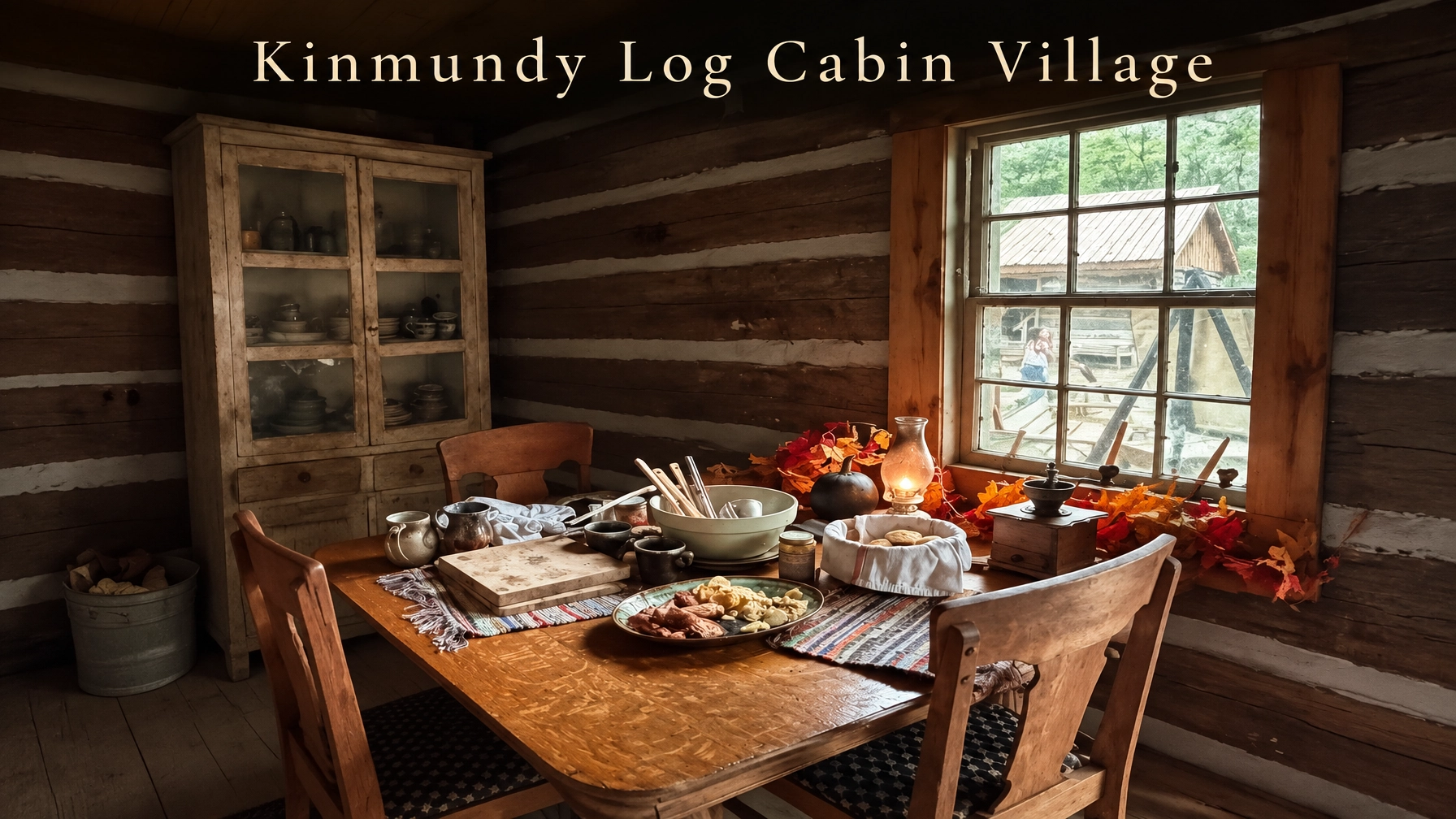
Megan Here! 👋
Every fall when I was growing up, my mom, my little sister, my Grandma Clara, and my Aunt Phyllis would make our way to Log Cabin Village in Kinmundy.
But first, naturally, we stopped at the Kinmundy local yard sales, because of course we did.
That was part of the ritual. We would browse the sales, find a few treasures, and then head to the village, where I went in and out of every cabin that was open. I remember the little ponies that used to sit in front of the old barn. The barn is gone now, and the ponies have since moved near the entrance where visitors pay to enter, but I can still picture them where they used to be.
I remember apple cider that you could taste before deciding whether to buy it. The seller, I’m sure, had his own orchard at home. I remember the old man who made kettle corn, too. He didn’t simply cook it. He put on a performance. You could hear him yelling and carrying on all the way across the village.

Little memories like this stay with me.
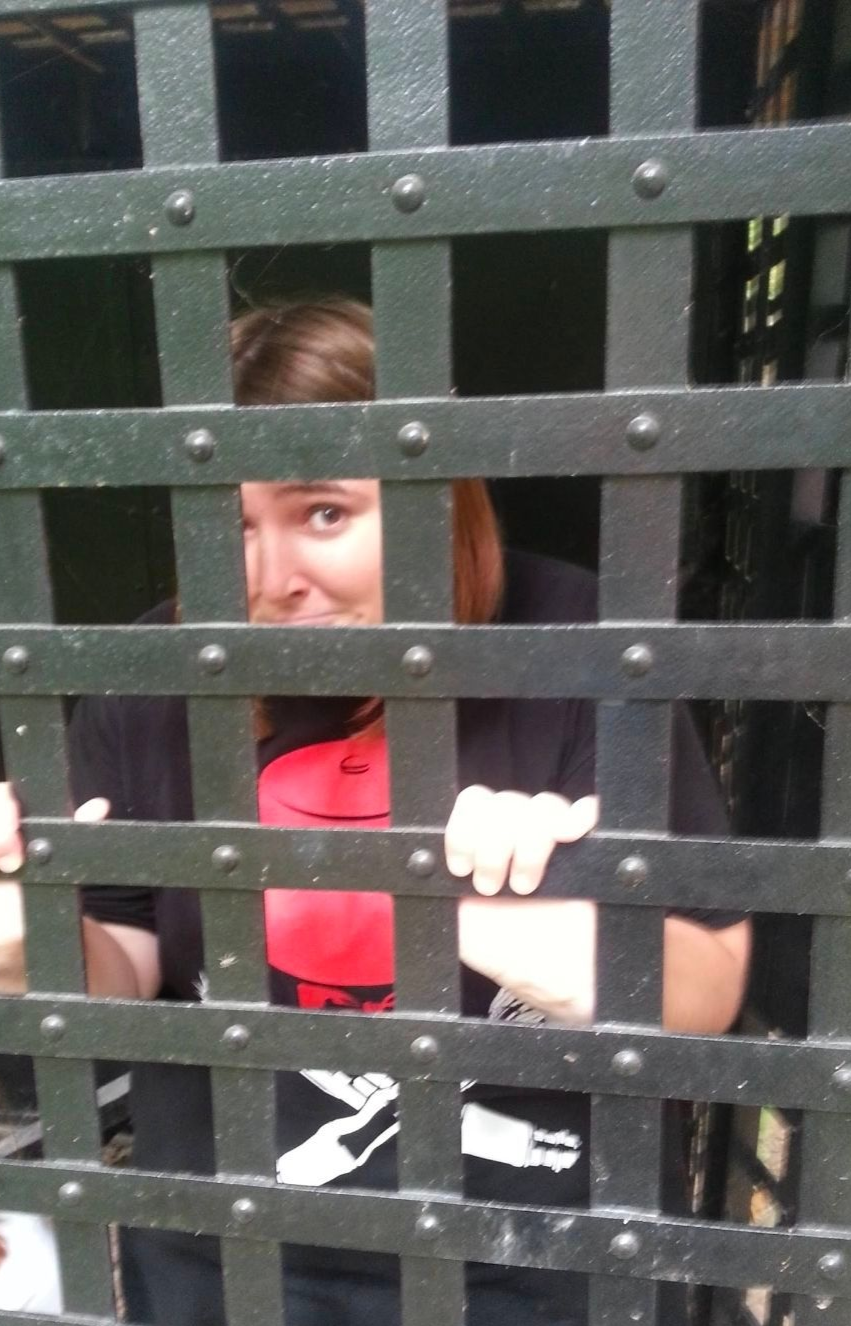
Megan back in the Log Cabin Village Jail in 2014.
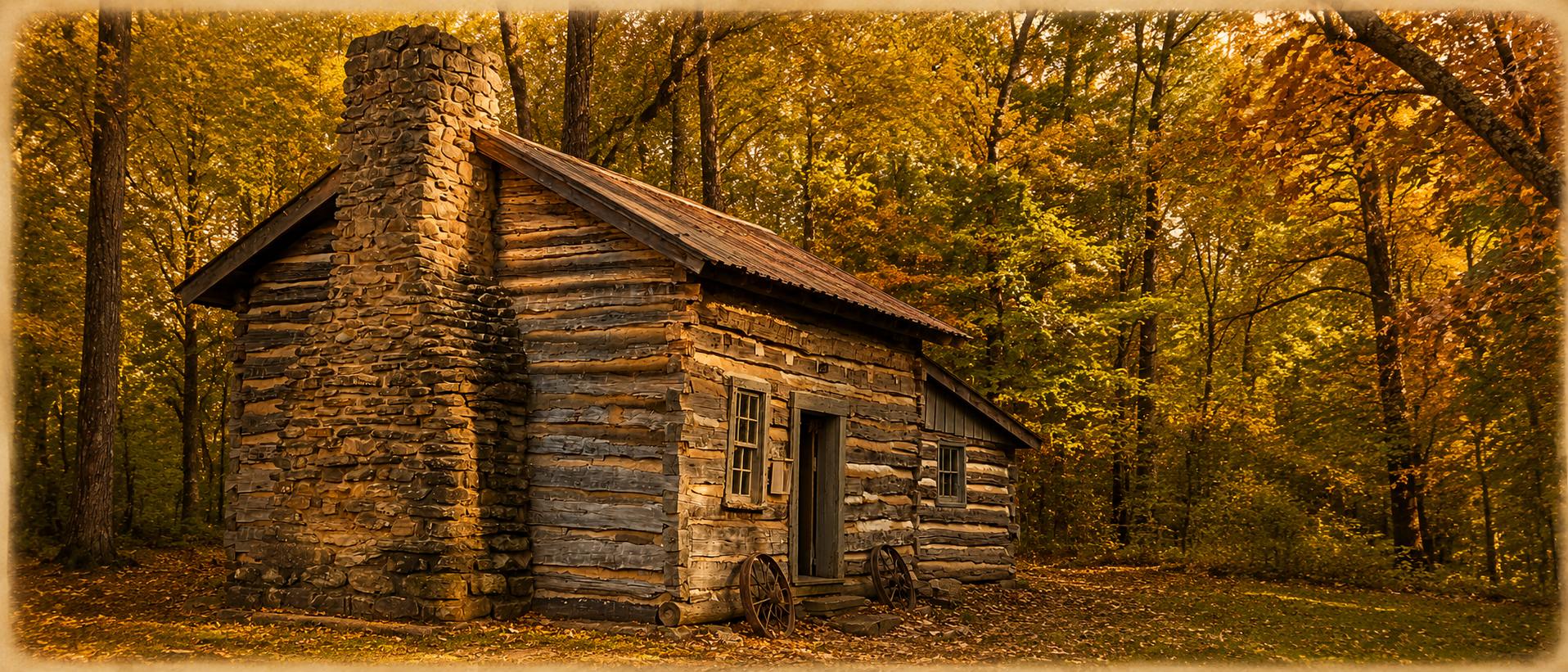
Can you believe this is why it exists?
Before it was known as Kinmundy Log Cabin Village, it was called Ingram’s Pioneer Log Cabin Village. And behind it all was one remarkable woman: Erma Ingram.
Erma was a music teacher in the Salem grade schools for 27 years. Her interest in old things began when she was just 11 years old. She hired a 12-year-old friend to drive her to an antique sale in Mulkeytown, offering 50 cents and help with the dishes. There, she bought a captain’s chest for 50 cents.
That small purchase became the beginning of a lifelong love of history.
Her admiration for Abraham Lincoln helped inspire her interest in log cabins and the people who lived in them. Erma was not someone who stayed in one small lane, either. In 1959, she planned and took her own two children on a three-month trip from Cairo to Capetown. She worked her way through what is now Roosevelt University, completed graduate work at the University of Illinois, and met all the requirements for a PhD at the University of Chicago except writing the thesis.
In the late 1950s, she saw that many 1800s log structures were disappearing quickly. Some of the first cabins she rescued came from the Omega area as land was being prepared for Stephen A. Forbes State Park.
Erma purchased the land in 1961 and bought her first log house in 1963. Her son, Bob, was in high school at the time. He and his friends did much of the heavy lifting, carefully numbering the logs so they could be put back together correctly.
That detail alone makes me think about the patience involved. Every log had to be marked, moved, remembered, and returned to its proper place.
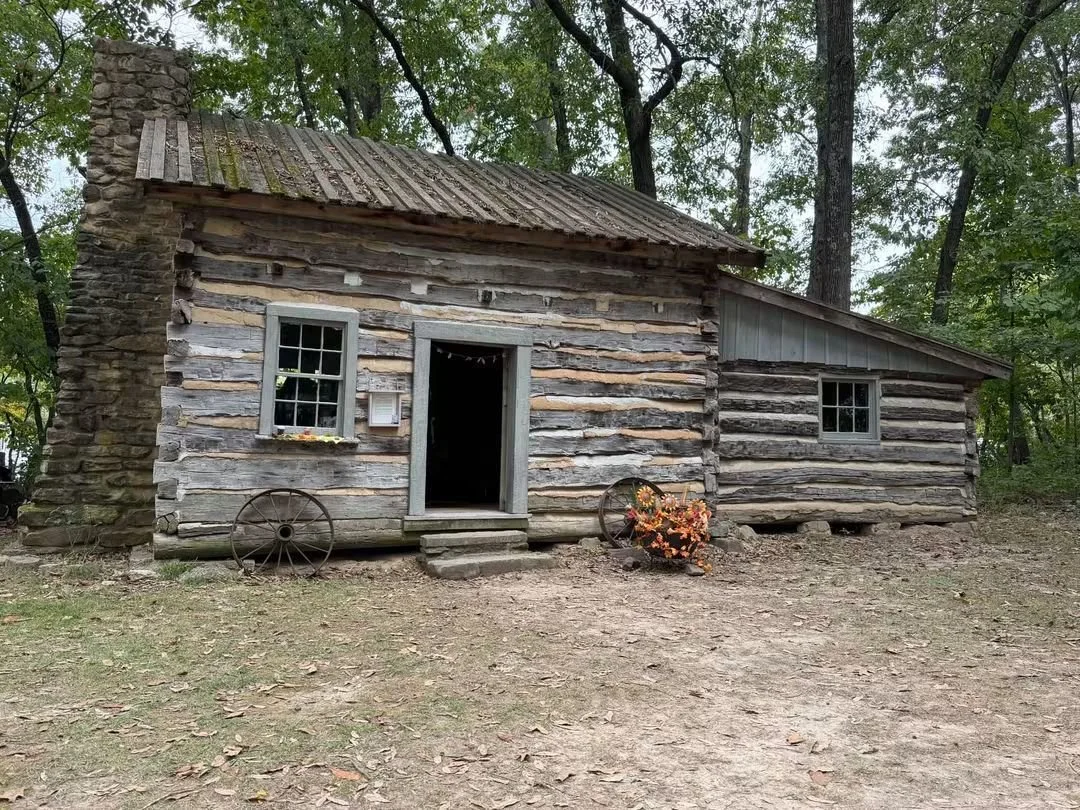
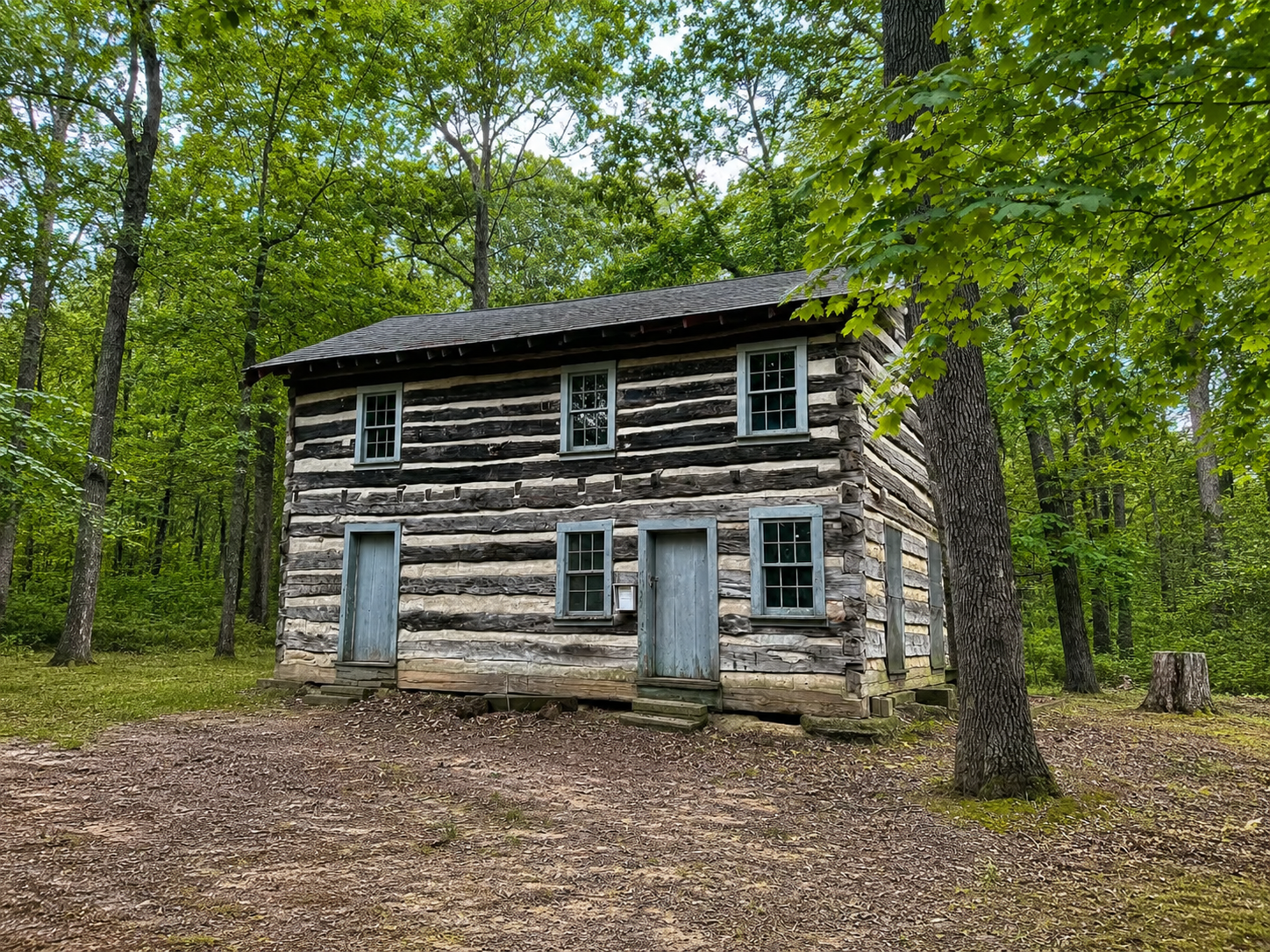
One cabin still has incised Roman numerals from 1870 on its logs. Most of the cabins were made of white oak logs measuring roughly 10 to 12 inches wide. Originally, the spaces between the logs were chinked with mud, which had to be patched each year to keep out breezes and bugs.
Inside, the cabins were whitewashed because they had so few windows. Entire families lived together in one room, with children sleeping on trundle beds or pallets. One Kinmundy-area family even kept their old log cabin after building a finer home, and moved back into the cabin on the coldest winter days because it was warmer and easier to heat.
Erma paid for all of it from her savings as a schoolteacher.
The village opened to the public in the mid-1970s, and the Fall Festival began around the same time. What started as one woman’s determination became a place where generations of families could walk through history together.
And then there is the 1818 walnut cabin: one small room, said to have been hastily raised for a young couple traveling toward Missouri when the woman was too pregnant to continue.
A building that exists because someone needed to rest.
That may be one of the reasons the village feels so personal. These were not grand houses built for show. They were homes built for shelter, work, family, and survival.
A village that nearly needed rescuing again
Erma died in 2003, and the village passed to her son, Bob. He continued her work, but maintaining historic cabins and organizing a large annual festival is a tremendous responsibility for one person.
When Bob died in 2016, Erma’s trust deeded the property to Shriners Hospitals for Children. The organization did not even know it had inherited the village.
By then, the festival had already been booked and vendors had already paid. Local leaders, including Rick Hanks, contacted the Shriners to ask whether the event could still go forward.
The answer was essentially: if the plans and insurance were in place, continue.
So the festival went on.
That moment says something about Kinmundy. The village did not simply belong to an organization on paper. It belonged to the people who had spent years visiting it, working it, vending at it, and believing it should remain.
Over the following years, local community leaders formed Kinmundy Promotions, Inc., a 501(c)(3) nonprofit, and purchased the village outright. Today, the site is operated by volunteers, including Rick Hanks as president, Teresa Hanks as treasurer, Ed Green as vice president, Nancy Hanna as secretary, along with Julie Green, the Mettes, Cody Jayne, and Debbie Wolfe.
Rick has described the heart of the work simply:
“It is all about the preservation of a simpler, harder time.”
Julie Green has expressed the same feeling another way:
“Erma had a vision. Who else would have thought all of this would still be here and people would still be coming to see it all these years later? They don’t make them like this anymore.”
What the volunteers have built since
The current volunteers have done far more than keep the gates open.
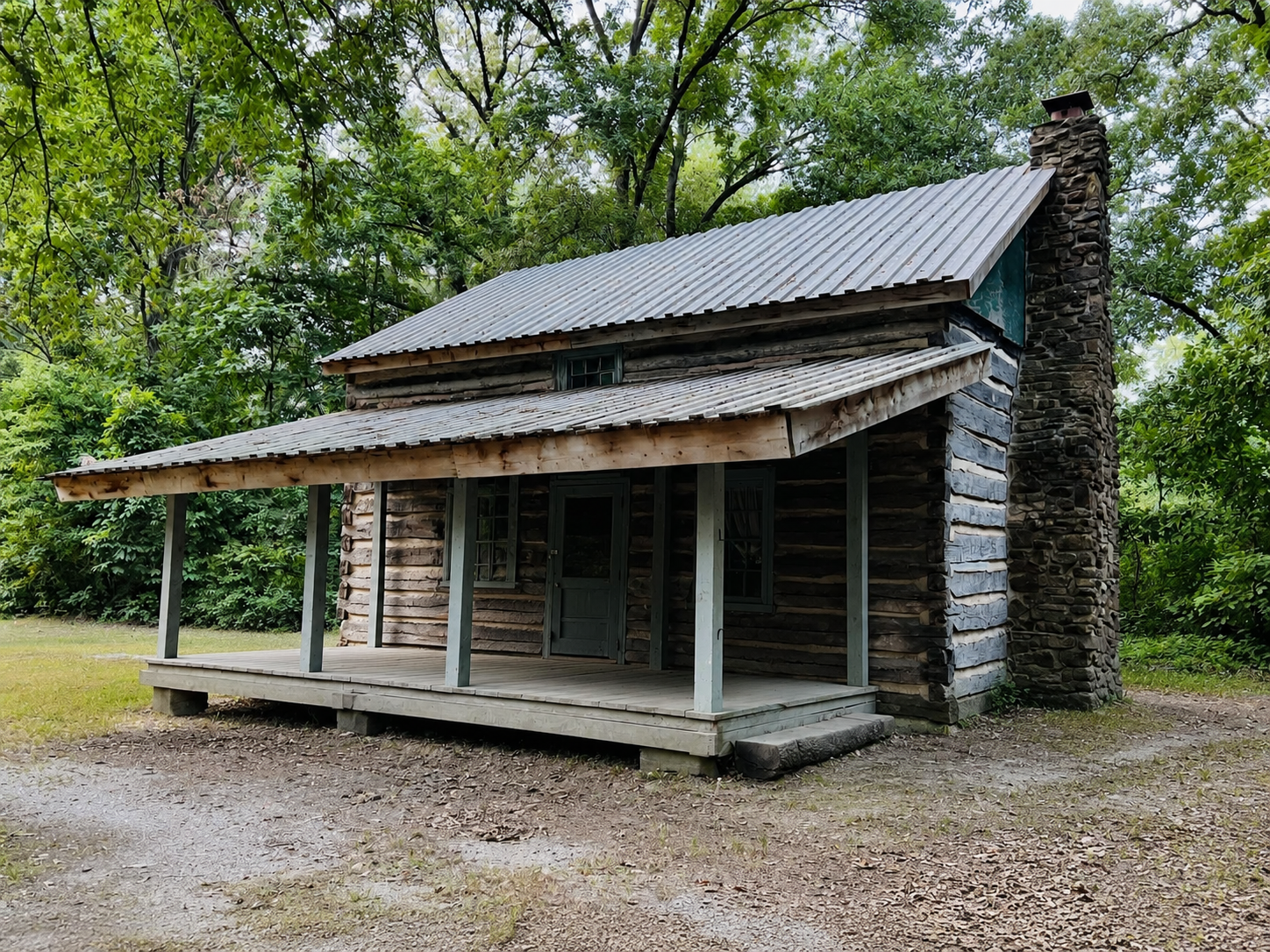
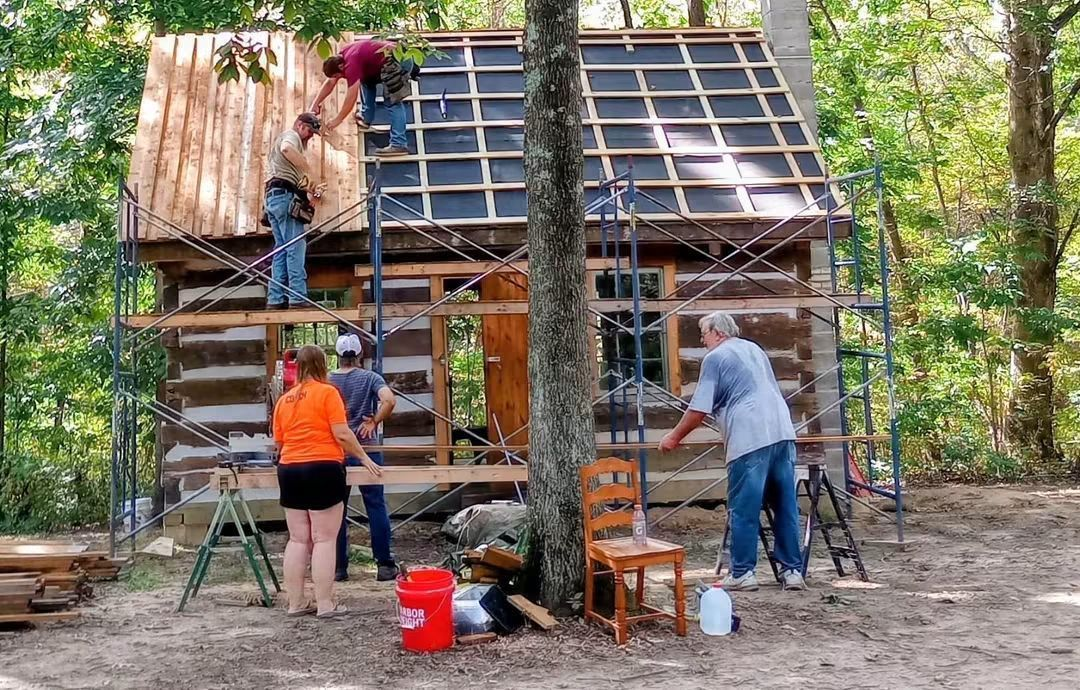
They have continued repairing and restoring the remaining cabins, including replacing a rotted roof. The Davidson Cabin was completely remodeled; it once served as the watchman’s home and has since been developed into the village’s general store and souvenir shop.
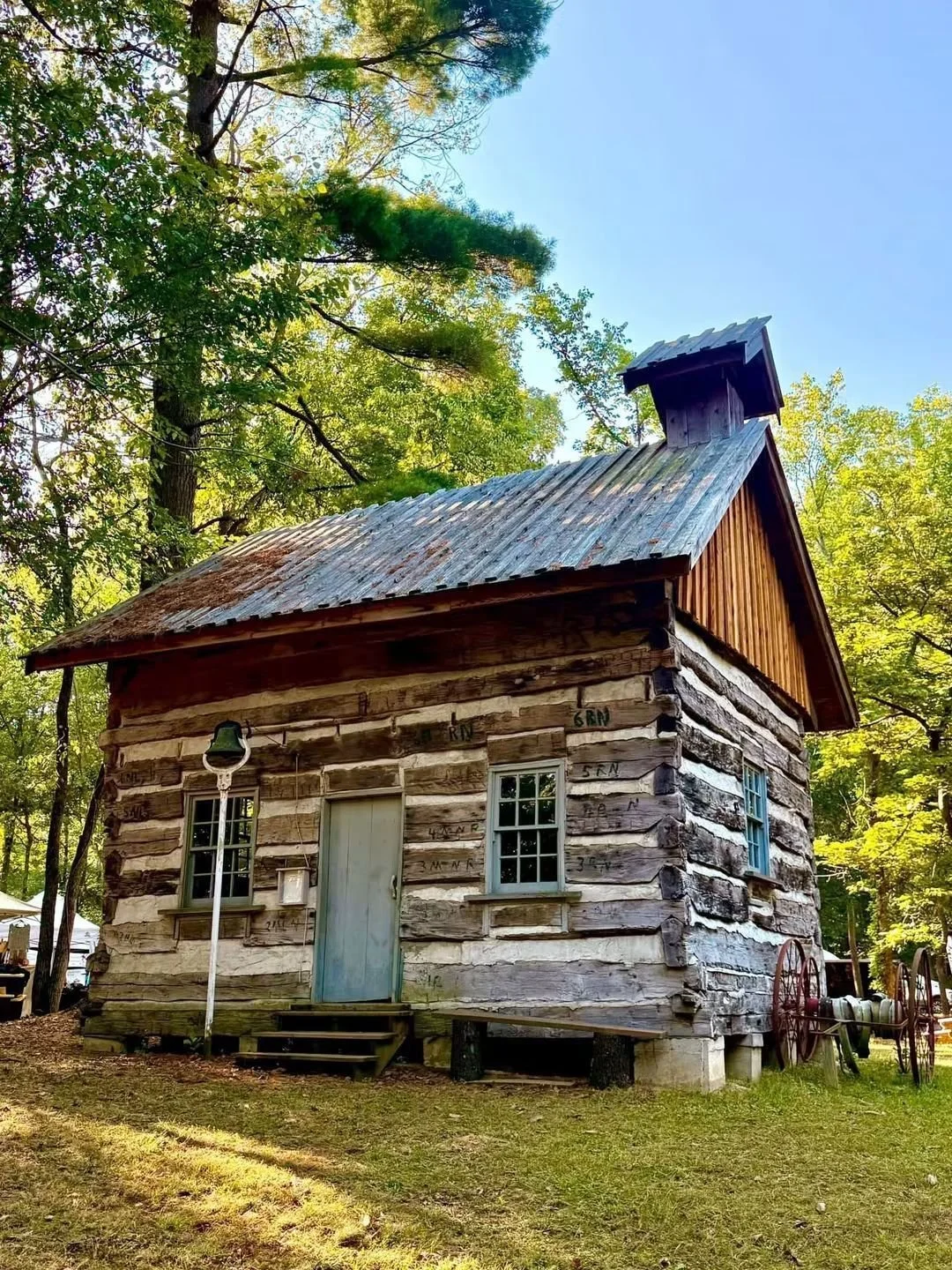
The Stevenson Cabin has been repurposed as a one-room schoolhouse and church. Every spring, school groups visit, and children get to ring the bell. It is an especially lovely way to connect local history with the next generation, not only by looking at old buildings, but by stepping inside them.
The village has also added the Haunted Trail, which began in 2018 and welcomed more than 3,000 visitors by 2022. Volunteers have also poured footings and put up two cabins donated from Clay County, the first cabins assembled at the village since 1978.
Then, in 2023, another opportunity arrived. A log cabin village in Oakland, Illinois, closed after the father and son who had been building it both died. Kinmundy volunteers offered to bring all twelve cabins to their site.
As Rick Hanks explained:
“We looked and told them we would bring them all down here if that would make them happy. So we are going to set them all up in their own little village and have a Log Cabin Sub Division.”
Reconstructing that new section is expected to take five to ten years.
At nearly every cabin during the Fall Festival, a costumed volunteer demonstrates a pioneer skill: blacksmithing, butter making, rope making, stone soup, and other hands-on traditions. The festival’s proceeds help pay for cabin upkeep and repairs, as well as scholarships for South Central High School seniors in memory of Erma and Bob Ingram.
Of all the demonstrations, the rope making is the one my son has loved most. I still cannot get over how many people we saw both weekends walking the grounds with ropes slung over their shoulders like they had picked up a little piece of another century and decided to carry it home. There is something so charming about that. It reminds me that at Kinmundy, people do not just look at history — they get to hold it in their hands.
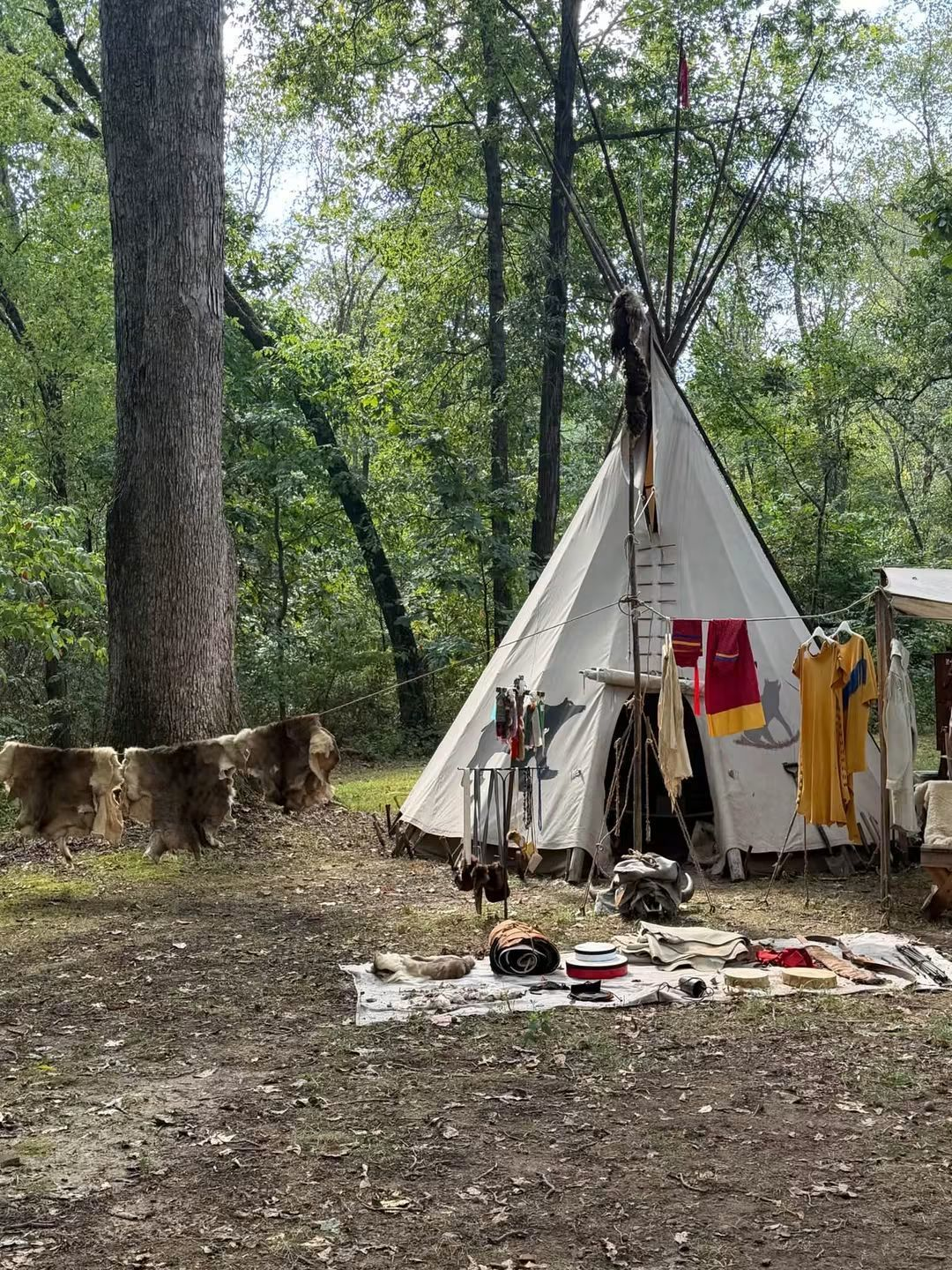
In 2023, organizers reported more than 4,000 paid visitors on Saturday alone, with traffic backed up to Route 37, followed by another 3,250 visitors on Sunday.
For a town of roughly 800 people, that is an extraordinary gathering. Mayor Angie Diss has called the village “an invaluable resource” and said it has become the thing Kinmundy is known for.
It is easy to understand why.
Our first official year at the village
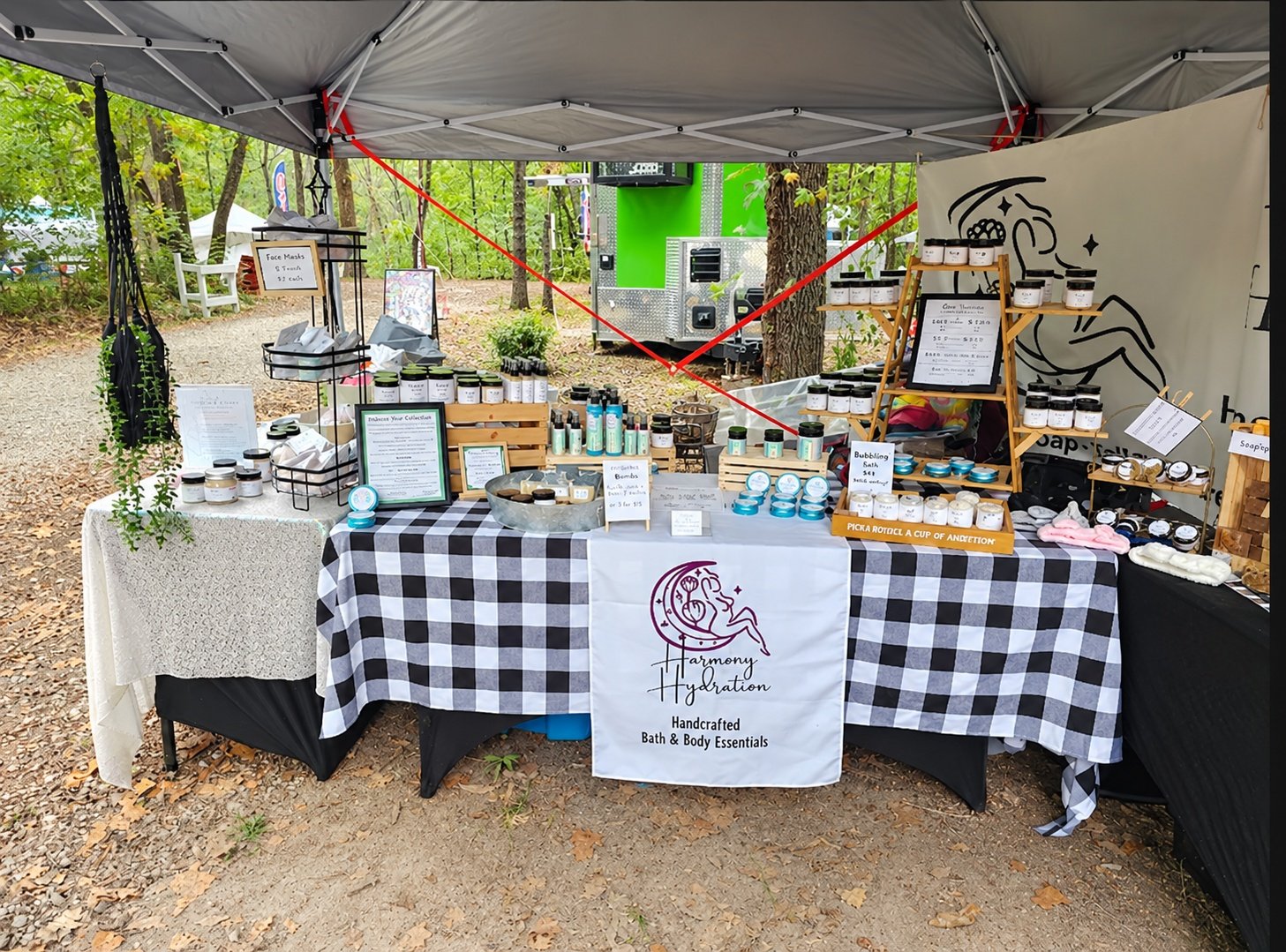
My mom and sister run Scent Savvy, and they have been vendors at the Kinmundy festival for years. So I always knew one of Harmony Hydration’s events had to be Log Cabin Village.
This is Harmony Hydration’s first official year as a vendor there.
Our first weekend was hot. Saturday reached 93°F, Sunday reached 90°F, and we even had a brief rain shower move through on Saturday. It was so hot, truly the kind of heat you remember, and still we had a good turnout and enjoyed being part of the event.
The second weekend is behind us now, too, and it turned out to be a great one. After that first brutally hot weekend, the weather shifted and gave everyone the beautiful, more comfortable festival weather they had been hoping for.
I’m grateful to the volunteers who make this festival possible, and grateful to every person who came out and visited the booth, whether in the heat of the first weekend or the beautiful weather of the second. Harmony Hydration’s first official year at the village is now complete, and we’ll be back.
I still think about the old man who made kettle corn when I visit. He has since passed away, and I believe the business has been carried on by someone else. The kettle corn is still there, but it is much quieter now.
No shouting across the village. No fanfare.
But memory has its own kind of sound. Sometimes it is the crackle of popcorn. Sometimes it is a pony near the entrance, a warm cup of cider, or a child opening the door of a cabin for the first time.
Little memories like this stay with me.
And perhaps that is what Kinmundy Log Cabin Village has been doing all along: giving families a place to make memories that last.