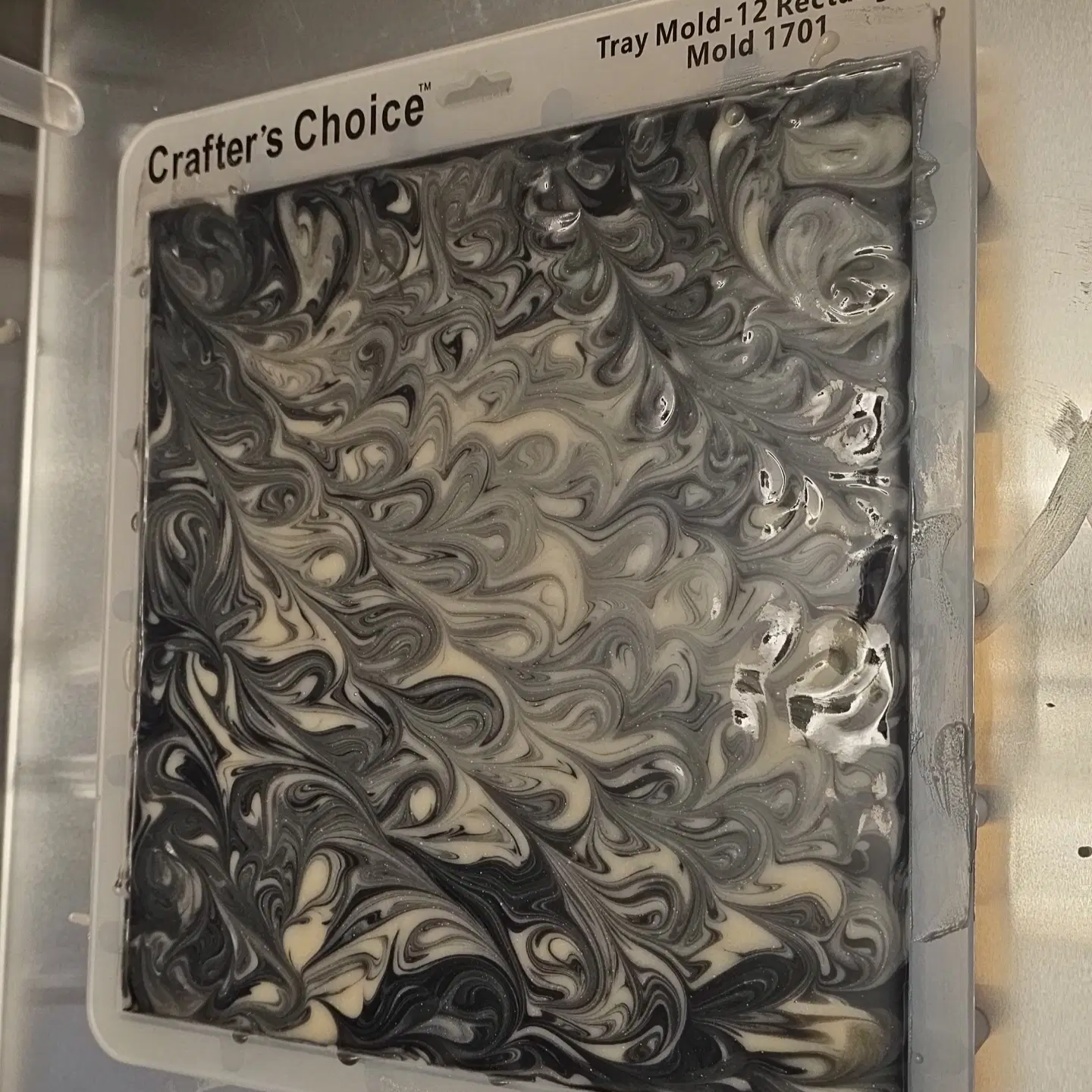
Here’s a question most people have never thought to ask: is the bar in your shower even soap?
A lot of what’s on store shelves isn’t. It’s syndet — synthetic detergent — shaped into a bar and sold under a softer name. Real soap happens when fats or oils react with lye in a process called saponification, and it can’t be rushed, faked, or mass-produced the way a detergent bar can.
That’s where the waiting comes in. There is a quiet satisfaction in watching something take shape slowly, by hand. A bowl of ingredients becomes a silky batter; a pour becomes a loaf; and, after weeks of waiting, that loaf becomes the bar you bring home and set beside the shower.
Soap doesn’t rush. That may be part of its charm. At Harmony Hydration in Centralia, Illinois, each small batch asks for attention at the beginning, patience in the middle, and a little imagination at the end. It’s one way we put our words into practice: Real Ingredients. A Little Bit of Magic.
Before the pour: choosing the recipe
Every batch starts with a plan. The recipe sets the character of the soap: its particular blend of fats and oils, how it feels in the hands, and what ingredients may be added for scent, color, or a little visual detail. There isn’t one single recipe for every bar. The choices vary with the soap being made.
The ingredients are measured carefully, because soapmaking is both a craft and a chemical process. In cold-process soap, oils and fats combine with water and lye. That reaction, called saponification, turns the ingredients into soap. The lye is handled with care and proper protective equipment; it isn’t an ingredient to approach casually. The Handcrafted Soap and Cosmetic Guild’s overview of soapmaking explains how the process works.
It’s a part of the work customers may not see when they pick up a finished bar at a market. But those measured beginnings matter. Each soap has its own recipe, and every choice helps shape what comes next.
A careful mix, then a moment of creativity
Once the ingredients are ready, the oils and lye solution are combined and blended until the mixture thickens. Soapmakers call this point trace: the batter has reached a consistency that can hold a faint line on its surface.
Then comes the part that feels a little like painting. Depending on the recipe, scent or color may be added, and the batter can be poured or swirled into its mold. Even when there’s a design in mind, the finished pattern has a way of keeping its own small surprises.
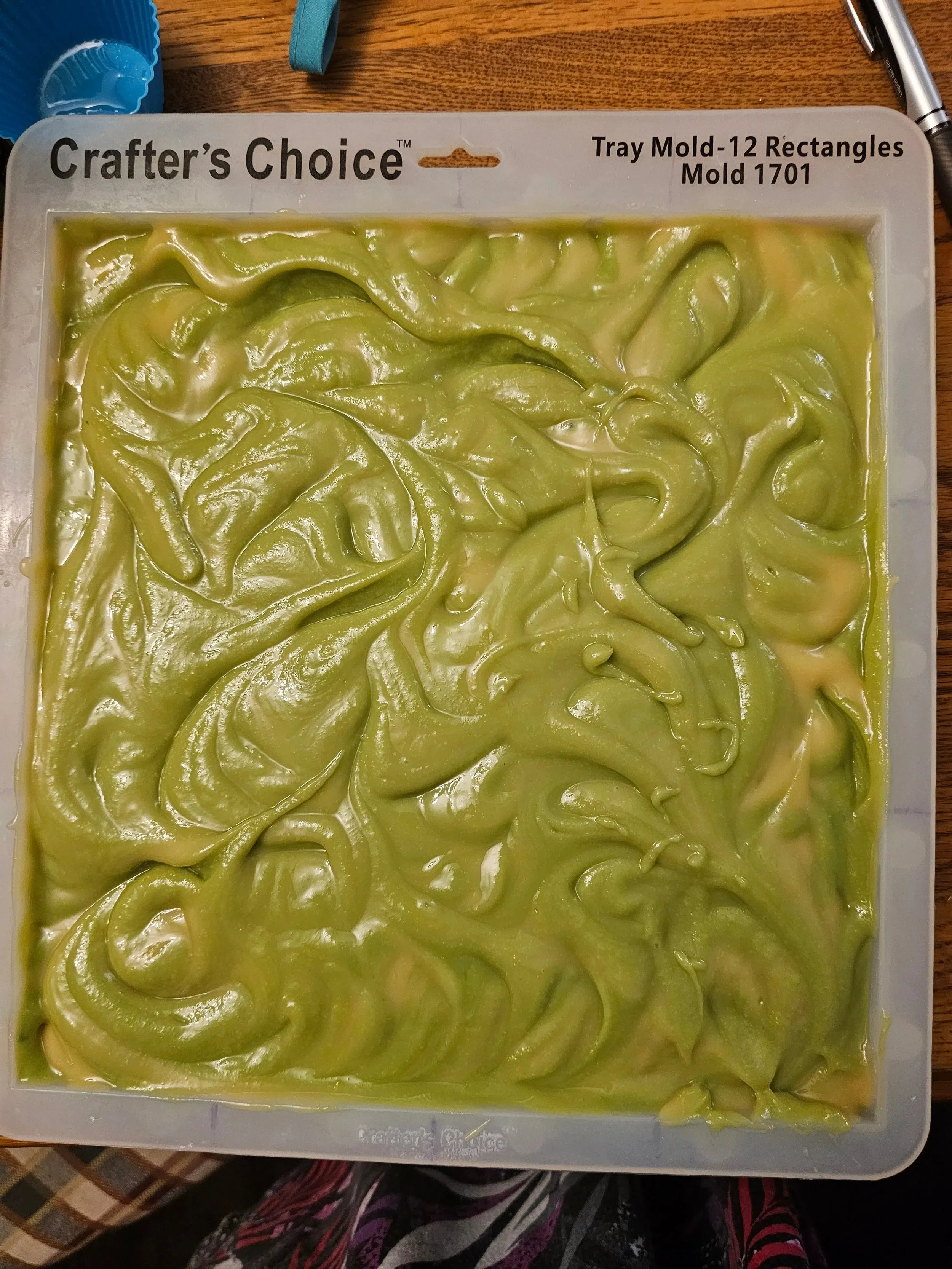
The pour is a brief moment in a long process. The soap rests in its mold while it cools and firms up. After it’s ready, it can be unmolded and cut into bars. Each one begins in the same batch, but little differences in the cut, the surface, or the swirl make each bar its own.
The part that asks for patience
Cutting the bars doesn’t mean they’re ready for the shelf. Cold-process soap needs 4–6 weeks to cure. During that time, the bars rest on a rack with room for air to circulate. The cure gives excess water time to evaporate, helping the soap become harder and longer-lasting.
A curing rack is not the most dramatic part of soapmaking. Nothing much seems to happen when you glance at it. But it’s an essential stretch of the process: the batch has been poured, and now it needs time.
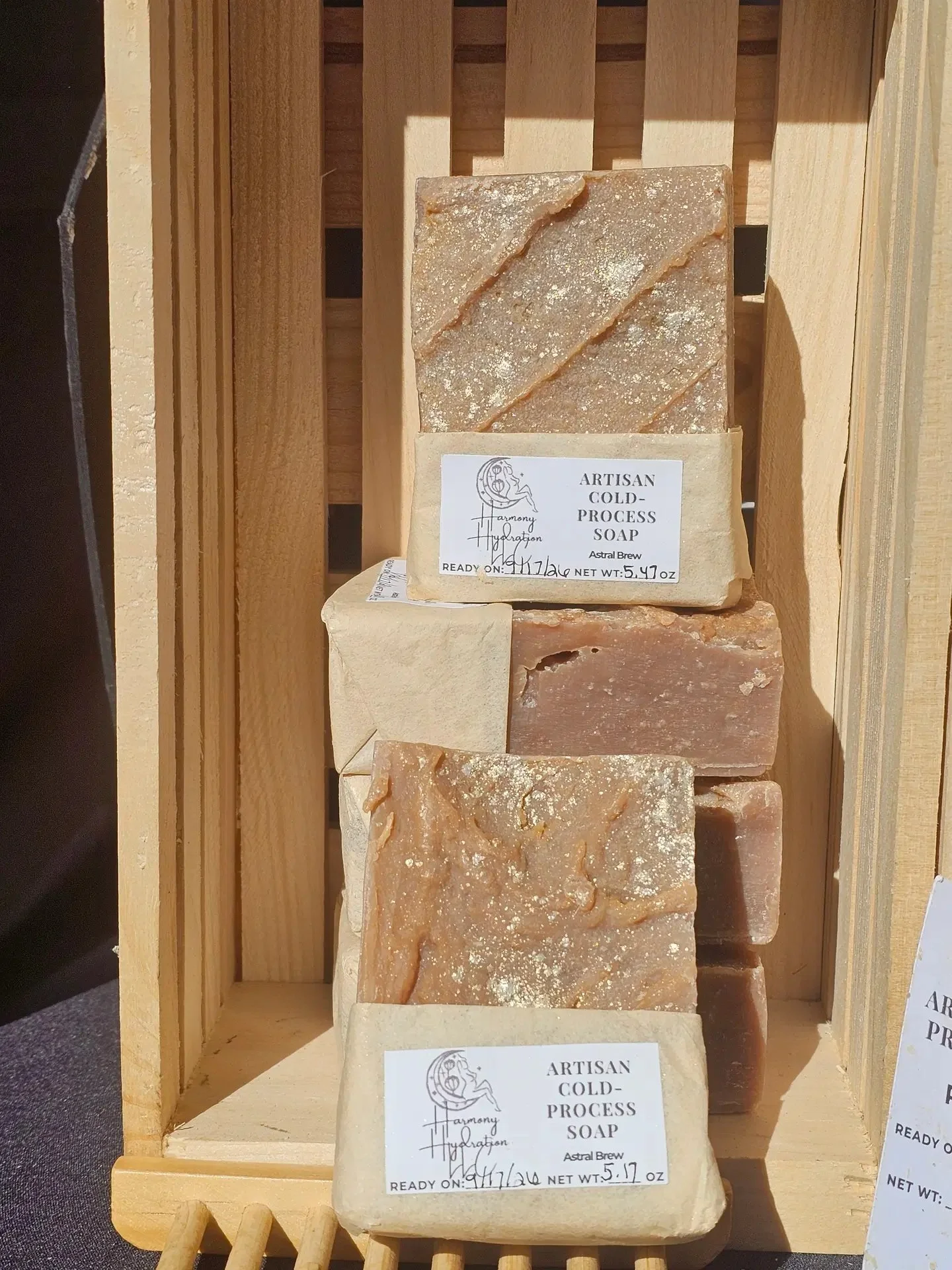
That waiting is one reason small-batch soap isn’t made overnight. Between selecting and measuring ingredients, making the batch, cutting the bars, and letting them cure, each step has a place. A new batch takes 4–6 weeks to be ready, so when a scent sells out, there may be a pause before it returns.
Dove isn’t soap (and neither is half that shelf)
The syndet story has a famous face. Dove — the classic — is called a “Beauty Bar” on its package, not soap, and the ingredient list explains why: Sodium Lauroyl Isethionate, Stearic Acid, Lauric Acid, Sodium Oleate, Sodium Isethionate, Sodium Stearate, Cocamidopropyl Betaine, and on down the line. Those are detergent ingredients, not saponified oils. It’s a cleverly made product, just not soap in the true, textbook sense.
That doesn’t make syndet bars bad — it makes them something else. But it does explain why handmade soap feels different in the hand and in the lather. It’s the real thing, made the way soap has been made for centuries.
The good news is that true soap is having a moment again. Brands like Dr. Squatch (with their women’s line, Jukebox) and Duke Cannon are putting legitimately saponified soap on mainstream shelves, and more small makers are coming out of the woodwork alongside them. Once you start reading labels, you’ll spot the difference everywhere.
Why a handmade bar costs what it does
A $5–$8 bar is more than its ingredients poured into a mold. Its price reflects the work behind it: planning a recipe, measuring and blending, shaping and cutting, checking the finished bars, and storing them while they cure. Small batches also mean a maker can’t rely on the same scale or efficiencies as a large factory producing bars by the thousands.
For any bar or lotion made with tallow, the work starts even earlier than the soap pot. We go to the meat processor and render our own tallow ourselves, and that’s not a single afternoon. Rendering takes multiple passes to turn what the processor would otherwise set aside into the clean, usable fat our recipes call for. It’s extra time that goes into every tallow bar and every jar of lotion, long before any soap is measured or poured.
That doesn’t make one kind of soap right for everyone. It simply helps explain the difference between buying a bar made in large quantities and choosing one made in a small workshop, where the process includes human hands and a longer wait.
When you pick up a bar at a Harmony Hydration booth, you’re holding the end of that whole sequence. You’re also meeting a local business in a very tangible way: not just a label, but a person’s time, decisions, and care carried from the workspace to your home.
A touch of everyday luxury
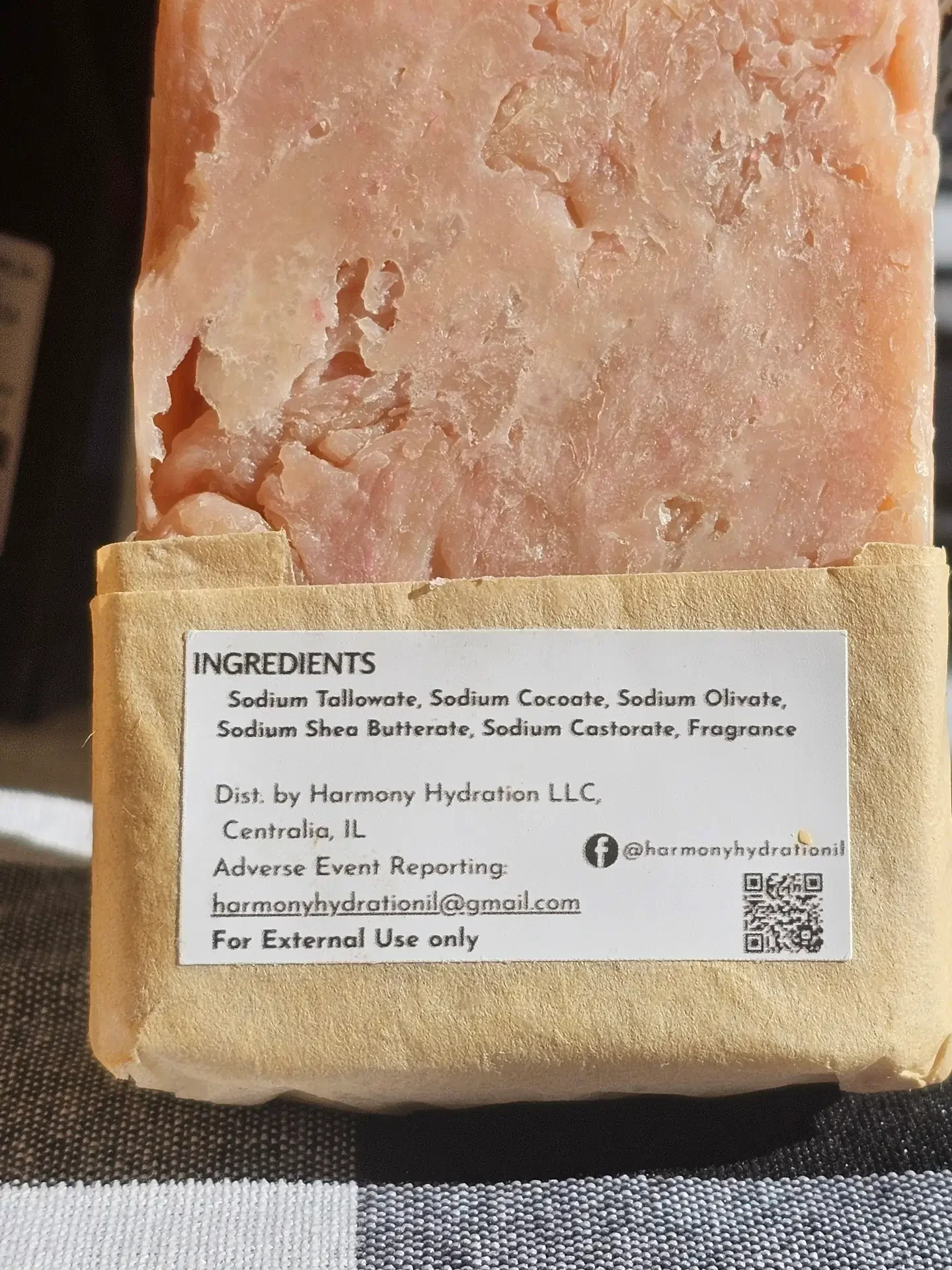
After all that careful making and waiting, soap’s purpose is wonderfully ordinary, but it doesn’t have to feel that way. Most of our bars are body soaps, meant for the shower or the bath, where you have room to slow down and actually notice them. A bar with a rich, creamy lather and a scent worth lingering over turns an everyday shower into something closer to a small luxury.
Maybe that’s why a good bar can feel like more than a practical thing. It gives you a tiny invitation to pause. Notice the scent. Feel the lather. Take the extra minute, even on a busy day, and let an ordinary shower feel like a treat.
To help a bar last, Allow the bar to dry between uses: a well-draining soap dish helps it last longer. A simple detail, but one that gives your bar a little breathing room between rituals.
A finished bar, and a little more to the story
Our soap shelf changes as batches are made and find their homes. Because inventory is small and moves between online shopping and in-person events, a listing may occasionally show a bar as available when that batch has already sold out. If a fresh batch is needed, it takes 4–6 weeks to cure. Thank you for understanding that handmade has its own pace.
Scents have their own rhythm here, too. Some fragrances come and go with the seasons or with what our fragrance suppliers have available. We try to keep our year-round staples on the shelf as often as we can, but others are one-of-a-kind concoctions we may never be able to fully replicate. When one of those finds its home, it’s gone — and that’s part of what makes a small-batch bar worth picking up while it’s there.
If you’d like to browse the soaps currently available, visit the Harmony Hydration soap collection or shop the full collection. And if you’re curious about the people and care behind the work, you can meet the makers.
The next time you pick up a handmade bar, you can picture it: the measured ingredients, the careful mix, the pour, the quiet rack, and the weeks of patience before it’s ready to go home with you. A small, useful thing: made slowly, and meant to become part of your day.